
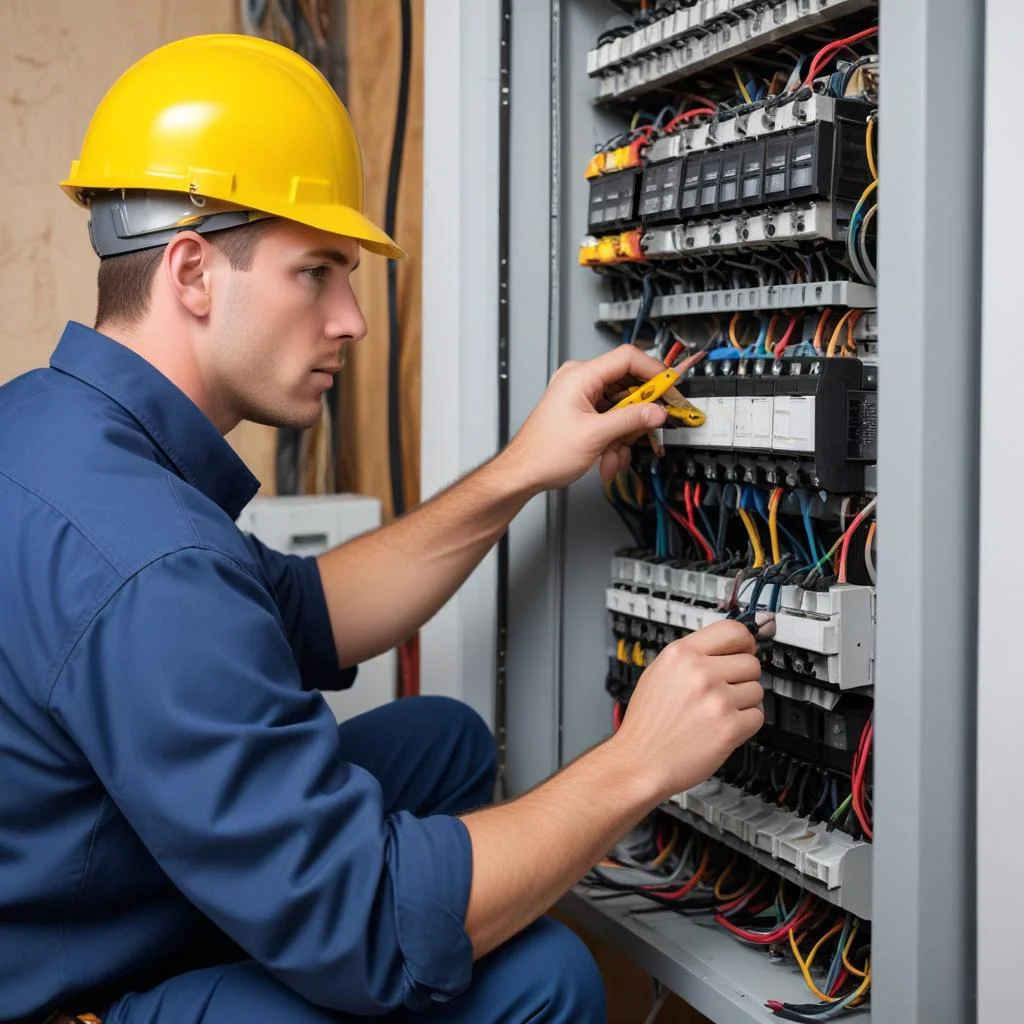
Electrical Work Costs in New Jersey
Electrical work is one area where DIY is not recommended - it's dangerous and often illegal for homeowners to do their own electrical work in New Jersey. Licensed electricians ensure your work meets NJ electrical codes, passes inspection, and keeps your family safe. Understanding typical costs helps you budget and recognize fair pricing.
Typical Range
$150 - $800+
Average Cost
$350
Detailed Price Breakdown
| Service | Low | High |
|---|---|---|
| Service Call / Diagnosis | $75 | $150 |
| Install Outlet or Switch | $100 | $200 |
| Install GFCI Outlet | $150 | $250 |
| Install Ceiling Fan | $150 | $350 |
| Install Light Fixture | $100 | $250 |
| Install Recessed Lighting (per light) | $150 | $300 |
| Install 240V Outlet (dryer/EV) | $250 | $500 |
| Panel Upgrade (100 to 200 amp) | $1,500 | $3,000 |
| Whole House Surge Protector | $300 | $600 |
| Generator Installation (portable hookup) | $500 | $1,000 |
| Standby Generator Installation | $5,000 | $15,000 |
| Electrical Inspection | $200 | $400 |
What Affects the Cost?
Permit Requirements
Most electrical work in NJ requires permits ($50-$300) and inspection. Your electrician should handle this. Unpermitted work can affect home insurance and resale.
Home Age and Wiring Type
Homes with aluminum wiring, knob-and-tube, or outdated panels require special handling and often need upgrades. This can add significantly to project costs.
Access to Wiring
Running new wire through finished walls, ceilings, or multiple floors costs more than work in unfinished basements or new construction.
Code Compliance Updates
When doing permitted work, inspectors may require bringing other items up to current code (GFCI outlets, arc-fault breakers, etc.).
Money-Saving Tips
- 1Always use a licensed electrician - NJ requires licensing for almost all electrical work
- 2Get multiple quotes - prices can vary 50% or more for the same job
- 3Ask about permits upfront - reputable electricians handle all permit requirements
- 4Request a detailed written quote breaking down labor, materials, and permits
- 5Check for proper insurance - electricians should have liability and workers' comp
- 6Ask about warranty on workmanship - most offer 1-2 years minimum
- 7Consider bundling multiple small jobs to save on service call fees
- 8Schedule non-emergency work during off-peak times for potential savings
When to Hire a Professional
- •Breakers trip frequently or fuses blow regularly
- •Outlets or switches feel warm, spark, or make crackling sounds
- •Lights flicker or dim unexpectedly
- •You're adding major appliances (EV charger, hot tub, AC)
- •Outlets don't hold plugs tightly or are the old 2-prong type
- •You smell burning or see scorch marks on outlets
- •You're renovating or finishing a basement/attic
- •Your home is over 40 years old and hasn't been updated
Red Flags to Watch For
- •Electrician isn't licensed or won't show credentials
- •Suggests skipping permits to save money
- •Gives quote without looking at the job
- •Much cheaper than other quotes (may cut corners)
- •Wants full payment before starting work
- •No written contract or warranty
- •Can't provide proof of insurance
- •Pressure to make immediate decisions
Frequently Asked Questions
Can I do any electrical work myself in New Jersey?
Homeowners in NJ can do very limited electrical work on their own single-family home without a license, but permits are still required for most work. Simple tasks like replacing a light switch or outlet cover plate don't require a permit, but anything involving new wiring, circuits, or panel work must be done by a licensed electrician.
How do I know if I need a panel upgrade?
Signs you may need an upgrade: frequently tripping breakers, using many power strips/extension cords, planning to add major appliances (EV charger, AC), or having a panel under 100 amps. Most modern homes need 200-amp service. An electrician can assess your current and future needs.
What's the difference between GFCI and AFCI?
GFCI (Ground Fault Circuit Interrupter) protects against electrical shock and is required in wet areas. AFCI (Arc Fault Circuit Interrupter) protects against electrical fires from arcing and is now required in bedrooms and living areas. Modern code often requires both.
How long does a panel upgrade take?
A typical 200-amp panel upgrade takes 6-10 hours of work, but the utility company must disconnect and reconnect power, which may require scheduling. Plan for your power to be off for 4-8 hours on the day of installation. The permit and inspection process adds a few days to the overall timeline.
Find Top-Rated Home Services Providers
Compare quotes from verified professionals in New Jersey
Find Local Pros